Caring for Ageing Parents at Home: What Delhi Families Need to Know
Delhi, one of India's most populous and fast-paced cities, is home to millions of senior citizens who spend their later years navigating the challenges of ageing — often without adequate support. As joint families give way to nuclear households and working professionals struggle to balance career and caregiving responsibilities, the need for quality elderly home care in Delhi has never been more urgent.
This guide is for families who want the best for their ageing parents while ensuring seniors can live comfortably and with dignity in the place they know best — their own home.
Why Home-Based Care Is the Preferred Choice for Delhi's Seniors
For most older adults, home is far more than a physical space. It is a sanctuary of memories, independence, and familiarity. Research consistently shows that seniors who age in their own homes experience better emotional wellbeing, lower rates of depression, and stronger cognitive health compared to those relocated to institutional facilities.
In Delhi's context, home-based care holds additional appeal:
- Familiarity with local culture and cuisine — Seniors are more comfortable with routines, food, and social networks they have built over decades.
- Proximity to family — Even if adult children cannot be present full-time, they can visit regularly when parents are nearby.
- Cost efficiency — In many cases, in-home care is more affordable than full residential care facilities.
- Reduced infection exposure — Particularly for immunocompromised seniors, staying at home minimises exposure to hospital or facility-acquired infections.
Types of Elderly Home Care Available in Delhi
Personal Care and Daily Living Assistance
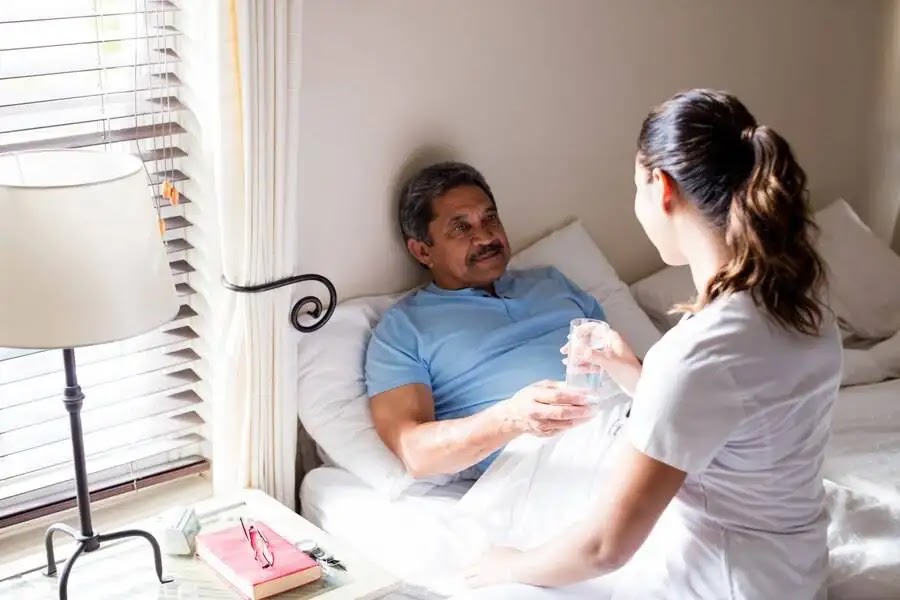
Many seniors need help with activities of daily living (ADLs) — tasks that most adults take for granted but become challenging with age or illness. Professional home care aides assist with:
- Bathing, grooming, and personal hygiene
- Dressing and mobility support
- Toileting and continence management
- Meal preparation according to dietary and medical requirements
- Medication reminders and prescription management
This type of support ensures seniors maintain personal dignity and hygiene without being entirely dependent on family members.
Companionship and Emotional Support
Loneliness is one of the most serious and underreported health risks facing Delhi's elderly population. Many seniors, particularly those who have lost a spouse or whose children live abroad, spend long hours alone. Professional companions provide:
- Meaningful conversation and mental engagement
- Assistance with hobbies, reading, and recreational activities
- Accompaniment to parks, temples, or social events
- Monitoring for early signs of depression, anxiety, or cognitive decline
Quality elderly home care in Delhi recognises that emotional wellbeing is just as vital as physical health.
Medical and Nursing Home Care
For seniors managing chronic illnesses, recovering from surgery, or requiring regular clinical monitoring, trained nurses and medical attendants can visit at home. Services include:
- Wound dressing and post-surgical care
- Catheter and stoma management
- Insulin administration and diabetic care
- IV fluid therapy and injections
- Vital signs monitoring (blood pressure, oxygen saturation, blood glucose)
- Coordination with attending physicians
Having a nurse visit at home eliminates the need for frequent hospital trips, which can be physically exhausting and emotionally draining for elderly patients.
Physiotherapy and Rehabilitation at Home
Physiotherapy plays a critical role in recovery from strokes, hip replacements, knee surgeries, and neurological conditions. Delhi-based elderly home care providers now offer door-step physiotherapy that includes:
- Mobility and balance training
- Post-fracture rehabilitation exercises
- Stroke recovery programmes
- Management of Parkinson's symptoms through targeted movement therapy
- Pain relief techniques for arthritis and musculoskeletal conditions
Dementia and Alzheimer's Home Care
Caring for a parent with dementia is one of the most emotionally and physically demanding experiences a family can face. Specialised elderly home care in Delhi for dementia patients involves:
- Structured daily routines to reduce confusion and agitation
- Memory stimulation activities
- Wandering prevention and safety monitoring
- Behavioural management strategies
- Respite care to give family caregivers a break
- Family counselling and education on progression of the disease
Palliative and End-of-Life Home Care
For seniors with terminal diagnoses, palliative care at home offers comfort, pain management, and emotional support in the most familiar and peaceful environment. Delhi-based palliative teams typically include nurses, doctors, counsellors, and social workers who coordinate care to ensure quality of life in the final stages of illness.
Key Qualities to Look for in a Home Care Provider in Delhi
The home care market in Delhi is diverse, ranging from highly professional agencies to informal arrangements. Here is what distinguishes a trustworthy provider:
Trained and Verified Caregivers Always confirm that caregivers hold relevant certifications — general nursing, geriatric care, first aid, or dementia care. Reputable agencies also conduct thorough background checks before placing any professional in a home environment.
Personalised Care Planning Avoid one-size-fits-all services. A quality provider will conduct a home visit and detailed assessment before designing a care plan tailored to the senior's medical history, personality, and daily preferences.
Consistent Caregiver Assignment Continuity matters deeply for elderly individuals. Frequent caregiver changes cause anxiety and disrupt established routines. Ask providers about their caregiver retention policies.
Family Communication and Reporting You should never feel out of the loop. Look for providers who offer regular written or app-based updates, are reachable by phone, and proactively communicate any concerns about the senior's condition.
Emergency Preparedness Understand exactly what happens in a medical emergency. Does the caregiver have first aid training? Is there a 24-hour helpline? How quickly can a nurse or supervisor be dispatched?
Transparent Pricing Request a detailed breakdown of costs. Understand what is included in the base rate and what is charged additionally (medications, consumables, specialised equipment).
Approximate Cost of Elderly Home Care in Delhi
| Service Type | Estimated Monthly Cost (INR) |
|---|---|
| Part-time caregiver (4–6 hours/day) | ₹7,000 – ₹16,000 |
| Full-time live-in caregiver | ₹16,000 – ₹32,000 |
| Nursing visits (per visit or monthly package) | ₹500–₹1,500/visit or ₹12,000–₹30,000/month |
| Home physiotherapy | ₹600–₹1,200/session |
| Specialised dementia care | ₹30,000 – ₹80,000+ |
| Palliative/end-of-life care | ₹35,000 – ₹90,000+ |
Costs vary depending on the locality within Delhi, level of care required, and the agency's reputation and infrastructure.
Neighbourhoods in Delhi with Growing Elder Care Demand
Elderly home care in Delhi is in particularly high demand in residential and affluent neighbourhoods where a significant proportion of the senior population resides independently or with limited family support. Areas such as South Delhi (Vasant Kunj, Greater Kailash, Hauz Khas), West Delhi (Dwarka, Janakpuri), and East Delhi (Preet Vihar, Mayur Vihar) have seen a notable rise in families seeking professional home care support.
Government Support and Schemes for the Elderly in Delhi
Families should be aware of national and Delhi-specific schemes that support senior citizens:
- National Programme for Health Care of the Elderly (NPHCE) — Provides geriatric outpatient and inpatient services at government hospitals.
- Pradhan Mantri Vaya Vandana Yojana (PMVVY) — A pension scheme offering a guaranteed return for seniors aged 60 and above.
- Delhi Government's Old Age Pension Scheme — Monthly financial assistance for eligible elderly residents.
- Maintenance and Welfare of Parents and Senior Citizens Act, 2007 — A legal framework that holds adult children responsible for the care and maintenance of their elderly parents.
While government facilities provide a safety net, they are often under-resourced. Most families seek private elderly home care in Delhi to supplement or replace these services.
How to Begin the Conversation About Home Care with Your Parent
One of the most common challenges families face is introducing the idea of professional care to a senior who may resist the change. Here are some constructive approaches:
Frame it as a support system, not a replacement. Reassure your parent that a caregiver is there to help them do more, not to take over their life. Emphasise that it allows them to stay at home — which is often their strongest preference.
Include them in the selection process. Let your parent meet and interview potential caregivers. When seniors feel they have chosen the person helping them, trust and cooperation develop much faster.
Start small and build gradually. Begin with a few hours of assistance per week. As comfort levels increase, additional support can be introduced without overwhelming the senior.
Acknowledge their feelings. Accepting help can feel like a loss of independence. Validating these emotions before problem-solving helps the conversation go much further.
Technology Enhancing Home Care for Delhi's Elderly
Modern elderly home care in Delhi is increasingly supported by technology that keeps families informed and seniors safer:
- Teleconsultation platforms — Seniors can consult doctors online without leaving home, reducing unnecessary hospital visits.
- Remote health monitoring — Devices that track vitals such as heart rate, blood pressure, and glucose levels in real time and relay data to families and doctors.
- Fall detection sensors — Wearable devices or in-home sensors that automatically alert caregivers in the event of a fall.
- Medication dispensers — Automated dispensers that release the correct dose at the correct time, reducing medication errors.
- Care management apps — Families can track care schedules, review daily logs, and communicate with caregivers through a single platform.
Conclusion
The growing availability of professional elderly home care in Delhi reflects a welcome shift in how Indian families are approaching the care of their seniors. Rather than viewing it as an admission of failure, progressive families now see home care as an intelligent, compassionate investment — one that honours a senior's desire for independence while ensuring their safety, health, and happiness.
If you are beginning this journey, take the time to assess your parent's needs thoroughly, research providers carefully, and involve your loved one in every step of the process. With the right support in place, ageing at home in Delhi can be a fulfilling, dignified, and deeply positive experience — for seniors and families alike.
.jpg)

Comments
Post a Comment